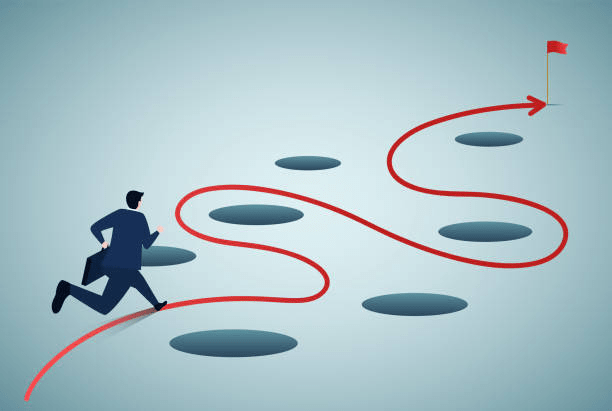
I believe adversity can be a convoluted dilemma in people’s lives, especially in young people. I remember as a kid, adversity was something to be recognized and conquered. Studying for a test after a long day of practice/a game and or band rehearsal could be seen by some as adversity. Playing a basketball game through a sickness to compete and hopefully help the team could be seen by some as adversity. Washing the dishes when you didn’t even use any dishes for the fourth time that day could be seen by some as adversity. I say this to say, I believe adversity can show up in a lot of arenas, and depends on the perspective of the individual. Adversity doesn’t have to be seen as a detour in one’s path, doesn’t have to be an enemy one must fight through or flee from, but I believe it can be seen as proving ground. A proving ground to oneself, through even the most trivial or tiresome tasks, I believe one can use adversity to understand how they want to express themselves that day. I believe when things seem to be falling apart, whether it’s dropping an egg from the fridge, or attempting to fall asleep and realizing you didn’t do one assignment, I believe this could reveal to oneself what matters to them and where the illusions of care begin to crack.
I’ve recently been wrestling with the fact of whether humans need conflict to create meaning. Now that’s a whole other blog, but in terms of adversity, I believe adversity can help us understand the human experience. I believe adversity can be seen as a ritual moment, a moment where one has a revelation, or is informed by a peer or someone of authority on whether the situation they are in is uncomfortable, confrontational, or maybe even unavoidable. Now the reasons for others prescribing an event as adversarial is another discussion as well, but I believe the internalized sense of adversity brings one to question their desired comfort level, question one’s level of discipline to maintain the comfort level, and the ways one performs their discipline publicly to mask their discomfort.
Adversity in Discomfort
As you might see in my documentary with Tom Manuel, we discuss the important role negative emotions, or undesired emotions, have in human lives. I believe, and I believe Tom would agree, unhappiness is not a flaw in a human psyche, but a part of the spiraling signals our body and mind communicates to our spirit. I believe unhappiness, sadness, anger, and fear are powerful emotions we tend to run away from. We are encouraged to not be sad, or to not get angry, or to not be afraid. I believe as a society we can rethink this tactic. I believe some of the most prominent leaders of change in the world were influenced by the anger, sadness, fear, and unhappiness they saw in others and made an effort to change the catalysts of these negative emotions.
In the Highest Self Podcast, Sahara Rose and Rosie Acosta sit together for the last podcast of the 2025 calendar year and share advice on how to turn one’s life around in 20261. Halfway through the podcast, Sahara shares about her quest to understand truth and the discomfort she’s had with accepting other people’s understanding of the truth of life2. Sahara has fought the conventional ways of living, living a completely different life, deciding not to have a leads, deciding to live in places where people vacation, and aiming for peak experiences all the time3. Sahara believes she has had more peak experiences this month than most people have had in their life time, and this is not by chance, but by choice, uncomfortable choices that led her to letting go of a lot of things4. Jumping forward to about ten minutes left in the episode, Rosie shares one of her phrases going into the new year, choose challenge, find happiness5. After some banter, Rosie explains her statement, Rosie believes going through the challenges in life build resilience6. Rosie continues, the stories that we tell are meant to pacify our discomfort, and Rosie recommends choosing discomfort7. Rosie concludes her train of thought, choose discomfort, find happiness and Sahara loves the idea of discomfort, and believes one’s ability to sit in discomfort is an indicator of their loyalty8.
I had a feeling this blog as a whole would be quite gut wrenching throughout, and I will definitely be spending some time in self reflection. I enjoyed Sahara and Rosie’s discussion and though I may not have agreed with everything, I at least had to ponder and question where I stand with the claims expressed. I believe Rosie’s last statement about choosing discomfort to find happiness can have some validity to it, but in practice, I believe this advice can be quite dangerous and can lead to versions of abuse. On the lines of abuse, I also found Sahara’s add on at the end of Rosie’s claim to be quite intriguing, and I also agree that one’s ability to handle discomfort can correlate to their ability to be loyal to you as a friend or a romantic partner. However, I believe everyone is fighting some sort of addiction, whether it’s a physical harmful substance, a harmful mental loop, or some spiritual concept I don’t understand yet. I conclude by reiterating what I stated in the beginning of this blog, adversity is convoluted. Adversity can be an exposure on the misalignment between one’s desire and one’s lived experience. I believe this thought process can be valuable heading into 2026, allowing adversity to reveal the discomfort in one’s life, not to judge oneself, but to ask more questions.
Adversity in Dialogue
I have been quite busy this holiday break and have had some instances where conversation was close to breaking the boundary of family or friend into foe. It intrigues me how everyone digests their experiences through the lens of good times and times of adversity. In my experience, it really intrigues me to see when something that was once thought of as a good time, is opened up to the idea that it wasn’t just a good time and vice versa. Digging even further, sometimes it’s not even the revelation of new information that can change one’s perspective on an event, but the speaker or the storyteller can completely flip and even from one side of the spectrum to the other. I believe this is not simply a lack of awareness, but could be seen as a lack of a mediator. I believe the flipping and flopping of one’s perspective can be viewed as adversity, a collision of values without translation.
In the Culture Apothecary Podcast, Alex Clark sits with Doug Clark as they take a deep dive into the spanking of children debate9. In the beginning of the podcast, Doug shares his opinion that pampered boys are the worst10. Alex asks why Doug points out the specificity of boys and Doug replies boys are led to become men11. Doug continues, if boys aren’t taught what men are for, they are not going to grow into that, they are not going to grow into what god has called them to be, providers and protectors12. Jumping ahead in the podcast, Doug rhetorically asks what god’s word requires of parents13. Doug continues, god’s word requires discipline, care, feeding and instruction, all while keeping the child’s best interest in mind14. Doug closes his claim, stating there is a difference between correcting one’s child from selfish motives, and correcting one’s child because you love them too much to let them grow up in a way a parent doesn’t believe god intended15. Jumping once more, Doug gives an outline of how spanking works in his household16. Doug recounts, once the discipline is over, his child and him are back in fellowship, as the family prioritizes being in fellowship with one another17. Doug believes when a family prioritizes fellowship, the kids grow up loving the standard, the kids like being in fellowship with their parents more than they enjoy fellowship with their siblings18.
I didn’t have time to listen to the whole podcast, however, I have so many questions for Doug and I don’t believe a lot of them will be answered. However, his convictions were very intriguing to me and I do believe there is value to his perspective. Doug focuses a lot on how the child is growing and maturing, and he seems to believe the parents have a ton of responsibility for directing the path of the child’s growth. I had a conversation with my dad over the holiday season about the way both children and parents frame one’s childhood. I believe my dad and I really grew through our dialogue, on my end, sitting with the tension of his expressed disappointment and pain associated with the past. I took the approach of offering a different perspective into how I reflect on the past. I did not want to try to resolve my dad’s judgement of himself for the decisions he made, but I thought it would be helpful to imagine a world where there is not tons of pressure on parents to raise a child “right”. As I mentioned before, the tension in our conversation grew, but I was impressed it did not boil over, as we both listened and tried to understand where each of us was coming from. I hope to remember that moment for a long time, as I believe it showed growth in adversity, sitting with curiosity moving away from judgement, and improving in our ability to have a dialogue that doesn’t lead to an argument.
Adversity in Solstice
I have been working on an art piece over the last 3 months that I will hopefully be satisfied with this weekend. I spent this past summer working and teaching with a professional artist who is currently in North Carolina. I learned a lot under him and have tried to apply that into my creation for the Fall/Winter. I planned this piece for a few weeks to a month before I would begin my work, making sure I would have an explanation for every part of my artistic method. However, after my first day in the art studio, I realized I “accidentally” put a part of the collage in the place I did not mean to do so. My plan was ruined, I made a mistake, and I could have quit, however, as Master Oogway famously said, there are no accidents. I believe art is not about creating the perfect piece, but creating the most adaptable piece. Reflecting on my experience, I’m glad it didn’t go perfectly at the beginning, now I am free to do things that don’t completely agree with my plan and leave it to materials to tell their own story.
In the Artistically Married Podcast, Jake Akkerman and Brianne Steinburg interview their son, Phoenix Akkerman and what stood out to him the most about his Christmas experience this year19. About halfway into the podcast, Brianne asks Phoenix if he thinks he’s being raised creatively20. Phoenix replies he pretty much is and elaborates that he normally makes things that are really cool21. Phoenix lists some of the things he does, making a cardboard train in September, making Legos, playing piano, starting the drums, and draws22. Phoenix offers to play a drum solo and Brianne thinks this is perfect, as it could be used for the music in the bridges of the podcast, and she jokes about hoping Jake and Phoenix would have made a Christmas song23. Jumping forward, Phoenix leaves the podcast and Jake and Brianne share how grateful they feel that they both come from amazing families, where they have stuck together and don’t have to deal with blended families, single parent households, or split time between two parents24. Jake talks more about the divided family, and how they can double the events and dinners for family members to have to go to25. Jake believes they had the perfect amount to go to this year26.
It was very sweet to hear Jake and Brianne’s child on the podcast, and was also insightful to hear a little bit about their personal lives and the holiday cycle that exists. Phoenix responds to being raised creatively as a kid with a list, a list of accomplishments and times where he may have to fight through adversity to learn a new skill or create something without the traditional tools needed to create it. Jake and Brianne discuss the performative nature of the holidays and how lots of people are attempting to create a magical holiday season that has the perfect amount of events, meals, and family interaction. I think what makes the holidays so intriguing to me is that for some families, there are members they have not seen in a long time that show up to these events. Distance in time and space creates a disconnect between what we remember of a person and what they are in the present moment, new skills acquired and all. To me, I believe Phoenix, Jake and Brianne all contribute to what I believe is the nature of art, the turning of what was thought to be tradition into a new performance, adversity forcing change without caring for our consent.
Adversity in Provocation
Imagine escape. Create from hard adversity. Refrain from making the day your enemy. Enter and initiate. Consciously observe your discomfort. Argue and dialogue with it. Create and appreciate. Originate the day. Echo and resist. Make the most eternal. Mystify often. Reveal your twin. Become one with your soul.
Bibliography
- Highest Self Podcast, “635: This is Why You’re Unhappy… And How To Change That in 2026 with Rosie Acosta,” podcast audio, December 30, 2025, accessed January 2, 2026, https://open.spotify.com/episode/1wsRDvvwQNVHqkLBPxqeff. ↩︎
- Highest Self Podcast, ↩︎
- Highest Self Podcast, ↩︎
- Highest Self Podcast, ↩︎
- Highest Self Podcast, ↩︎
- Highest Self Podcast, ↩︎
- Highest Self Podcast, ↩︎
- Highest Self Podcast, ↩︎
- Culture Apothecary, “Is it Discipline or Abuse? The Spanking Debate with Doug Wilson,” podcast audio, December 29, 2025, accessed January 2, 2026, https://open.spotify.com/episode/0cjPOhMlns4XtAgYKEWuwH. ↩︎
- Culture Apothecary, ↩︎
- Culture Apothecary, ↩︎
- Culture Apothecary, ↩︎
- Culture Apothecary, ↩︎
- Culture Apothecary, ↩︎
- Culture Apothecary, ↩︎
- Culture Apothecary, ↩︎
- Culture Apothecary, ↩︎
- Culture Apothecary, ↩︎
- Artistically Married, “S2E8 Phoenix Akkerman: Tips for a Smooth Christmas Experience,” podcast audio, December 28, 2025, accessed January 2, 2026, https://open.spotify.com/episode/7KxnARcSuIqqKgDatq1BF5. ↩︎
- Artistically Married, ↩︎
- Artistically Married, ↩︎
- Artistically Married, ↩︎
- Artistically Married, ↩︎
- Artistically Married, ↩︎
- Artistically Married, ↩︎
- Artistically Married, ↩︎
 Spectrum of Spirit: A Digital Sanctuary for Spiritual Discourse and Community
Leave a comment