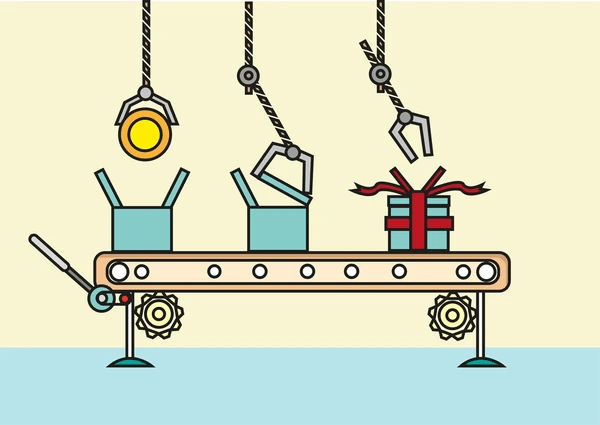
Growing up, I had spent time with my dad trying to assemble products, whether that’s my gifts received on Christmas day, or a new appliance we were adding to the house. Being an excited child ready to see the finished product, I would open the package and immediately try to put the pieces together as fast as possible. However, my discovery was quickly halted by my dad. Over the years, he constantly had to remind me to read the instructions carefully and slowly, not missing any steps so when we assembled the product, it would complete the function it was designed to complete. Looking back at this lesson, I’ve realized life can be a constant spiral of discovery and assembly. I believe human history is filled with discovering something new, whether it is actually “new” or is considered new by the searcher. From the moment of discovery, plenty of moments in our human canon are highlighted by assembling what this discovery can mean, and how that meaning can add to our existing and formed understanding of our experience. I believe sometimes these discoveries come with instructions, but for many of them, the discovery has a meaning that is waiting to be uncovered, waiting to be understood and appreciated. In this blog, I hope to challenge some of the preconceived assumptions we make about our discoveries, proposing the possibility of reconstructing our perceptions, layer by layer, to enter the new year with a new understanding of our experiences, interpretations and even our shared language.
Continuing with my challenge, I wonder if meaning isn’t something we discover, but we assemble. Can modern discussions of spirituality, culture, and art contribute to the process of meaning making in human life, instead of being perceived as fact or answers?
Conceptual Assembly
I recently attended a lecture about supporting aggressive children. The speaker, Alec Goldstein shared about positive and negative punishment and reinforcement. I am not a psychologist, so I will not try to describe the nuances of the four categories, however, the classifications remind me of a scoreboard, a reward system associating actions with consequences. As a society, especially in religious settings I believe we are taught to understand life within this concept, the “good” we do is rewarded with more “good”, and vice versa. Or the “good” we do negates the “bad” we do and vice versa. I want to challenge whether this conception of life is consistent within our universe, within the cosmos, and within the moral frameworks established through religious institutions.
On The Sadhguru Podcast, Sadhguru answers questions about Karma, Life and Destiny1. At the beginning of the podcast, one of the moderators brings up that many religions have a concept of going to heaven, and if they do good deeds, an individual will go to heaven2. Sadhguru responds by mentioning a Kannada sage called Basavana who claimed people who don’t make it here will not make it anywhere3. Sadhguru explains he agrees with this because if one is unfit with their experience of life here with all their faculties intact, after one dies, they will go somewhere and experience life in a fantastic way, bypassing the life they previously had4. Sadhguru makes it clear he is not attempting to talk against any religion or belief system, but is trying to propose that life is not about reward and punishment5. Sadhguru elaborates further, that reward and punishment in its ultimate form is heaven and hell, a way of skipping life here to try to live somewhere else that is supposed to be better6. Later on, Sadhguru defines Karma as action, his action, and claims when he says my life is my action he means his life is his making7. Sadhguru believes no one else is managing his life, only he can shift the controls of his life from heaven to within8. The moderator likes this concept, that it’s about the now, one’s action, and what one makes their life to be9. The moderator continues, it’s about the life they have, not about going to the afterlife, not about what one is going to do when they retire, and finds it interesting people can be trapped in this way of thinking10.
Sadhguru’s podcast always contains a ton of gems, especially the longer ones where he can really expound upon his thoughts. One thread that seemed to permeate in all of the different topics was Sadhguru’s framework of continuity, and how living outside of the present can remove one’s authorship of their own life. Sadhguru claims Karma is action, and his intentions will ultimately leave him as a failure in his eyes, his goals set extremely high. However, Sadhguru does not let this weigh on him and has accepted he will consider himself a failure, he has embraced his circumstances hoping they echo through time. Though times will continually increase the complexity of how we value certain lifestyles, afterlives, and even lives, I believe it’s important to conceptualize how one assembles their ideals, and appreciates how the progression may not always be linear.
Cultural Discovery vs. Cultural Assembly
I had a discussion today with someone about a lot of abstract ideals, consciousness, love, selfishness, etc. I believe it can be difficult to navigate misunderstandings in these types of ideas, especially if they are attached to an individual’s belief system due to the fact it may be associated with one’s cultural identity. I have been practicing and trying to improve my awareness to not assume others don’t think, feel, or believe the same way as me. Another aspect of these conversations I am learning how to improve on is my ability to ask questions, aiming to open up the conversation as a sharing time rather than me holding one’s convictions under a microscope. Whoever is reading this, I would challenge you to reflect on how you navigate misunderstandings, how you wrestle with abstract ideas, and how you create a sharing environment compared to an examination area.
On the Cultural Gabfest Podcast, the team found one of their old podcast recordings from 2013 in their archives11. In the third chapter of the episode, the team discusses the art of navigating dialogue, focusing on surprise, anecdotes, and social jiu-jitsu12. The male team member asks Dana what she thinks makes a great conversation. Dana states that a great conversation has a delicate balance between graciousness and honesty13. Dana believes when a conversation is all honesty, humor, and surprise it’s just two people throwing crude jokes at each other, however when a conversation is all graciousness and flow doesn’t allow for the unexpected to break through the dialogue14. Dana points to an example, when you pull two people who do not know each other into small talk at a dinner party, the moment the conversation starts is when someone asks a question or makes a statement with some risk behind it, a clause with an answer that is unpredicatable15. The other female hosts jumped in, defining the different types of conversations: the getting to know you conversation, the polite conversation at a party, the conversation with old friends, the conversation with strangers, the intellectual conversation, the personal conversation, the gossip, etc.16. However, she loves in a conversation when you end up somewhere different than where one started in the conversation, somewhere unexpected17. She continues, some of her most satisfying conversations on this show are when she comes in thinking one thing and leaves thinking another, or discovering a deeper conviction than she had going into the conversation18.
This podcast was a cool flashback into the discussions the team had in the past, and how a decade later, the values expressed in this conversation hold value today. Though this group has known each other for years, the interactions they have with others have contributed to each other’s individual understanding and their cultural diversity rising in conversations in their own unique way. Like the female team member stated, her most memorable conversations is when she left the show with a new understanding, complexity arising whether from different or deeper beliefs. The dialogue enriches others, whether small talk, gossip, or conversation with old friends. I believe the cultural discoveries enrich each other’s cultural assemblies, not pinning one against another, but creating a new understanding of their own abstract conceptions.
Paul’s Assembly
I would consider myself a structured person. I keep a pretty routine schedule, waking up around the same time every day, and then flipping through different activities to get through the day and pass the time. Reflecting on these patterns, I believe this goes back to the disciplined schedule I tried to keep as an aspiring athlete. I didn’t want to get too high or get too low in my day to day life, so I didn’t make time for irregular opportunities to surprise me in life. This was my assembly. Keep it simple, keep it contained, keep it compact, repeat the process and success might follow. Now, I try to balance my structure with an equitable amount of spectacle, allowing my assembly to come apart, and practicing being present enough to repair my rhythm.
On the Magic Our Way Podcast, the group discusses the deal between DC comics and their icons, like Batman and Superman, and Universal Studios19. In the third chapter of the podcast, the crew unpacks the Warner Bros. Discovery and Universal licensing deal20. The introducer of the topic opens up the section discussing how DC has had a huge presence tied to the Six Flag Theme Parks, that will now be tied to Universals Park21. After some time, he goes into laying out the key aspects of the potential deal, number one, the licensing of DC characters for their parks22. Number two, Warner Brothers Discovery is motivated to cut debts and boost revenue, similar to what Marvel did in the past23. Number three, this will have a huge impact on marvel, which Universal has hosted in their theme parks, DC’s potential arrival could push Marvel out24. Number four, Universal can integrate beyond the DC universe, gaining access to Harry Potter, Looney Tunes, and maybe even Game of Thrones25. Number five, there is a bidding war for Warner Brothers Discovery with Netflix to be the likely buyer for their studio and streaming assets, so Universal could focus on the theme park advantages of the potential deal26.
I heard about this deal through one of the group chats I am in, but the Magic Our Way group really went in depth to discuss the repercussions of the shift in rights in the entertainment industry. It reminds me of a course I took discussing museums’ artifacts and who owns the cultural property showcased, or archived, in a museum. Though loyalties are changing and money is shifting hands, I believe it’s important to recognize the exhibits and films created are artifacts to represent a unique time in American and maybe even world history. I believe it’s important that whoever will hold the future of these universes represents authentically the history behind their making and the values held during the time of their construction. I believe the mythologies were inspired by ancient cultural figures to help alleviate fears of the people during the era it was created, a creative outlet to quell chaos within society. I believe both DC and Marvel respectively helped romanticize conflict, reinforcing hope in the collective that “good” may reign supreme over “evil”. However, as Sadhguru claimed earlier, some of our traditional understandings of stories push us forward to miss the beauty of the present. I hope through this potential transition, we can begin to process what we have been fed through these forms of propaganda, and discover how we can assemble a new framework to support a perspective shift freeing us from binary thinking27.
Closing Assembly
Offer discovery. Quiet meaning. Assemble to the end. Direct your concepts. Invite other cultures. Read and close. Notice and understand. Own your expression. Inhale life. Name our origin. Eternalize the process.
Bibliography
- The Sadhguru Podcast, “#1425 – Karma #6 Karma, Life & Destiny,” podcast audio, December 21, 2025, accessed December 24, 2025, https://open.spotify.com/episode/423LMIkTApORTTFbuzbzPC. ↩︎
- The Sadhguru Podcast, ↩︎
- The Sadhguru Podcast, ↩︎
- The Sadhguru Podcast, ↩︎
- The Sadhguru Podcast, ↩︎
- The Sadhguru Podcast, ↩︎
- The Sadhguru Podcast, ↩︎
- The Sadhguru Podcast, ↩︎
- The Sadhguru Podcast, ↩︎
- The Sadhguru Podcast, ↩︎
- Culture Gabfest, “We Found Our Archives: The Abstract Noun Edition,” podcast audio, December 24, 2025, accessed December 24, 2025, https://open.spotify.com/episode/0mR5qErPsv1xz576wn2wEa. ↩︎
- Culture Gabfest, ↩︎
- Culture Gabfest, ↩︎
- Culture Gabfest, ↩︎
- Culture Gabfest, ↩︎
- Culture Gabfest, ↩︎
- Culture Gabfest, ↩︎
- Culture Gabfest, ↩︎
- Magic Our Way, “The DC-Universal Deal – MOW #608,” podcast audio, December 24, 2025, accessed December 24, 2025, https://open.spotify.com/episode/0OngTMfWvFjDgNuVLctD7C. ↩︎
- Magic Our Way, ↩︎
- Magic Our Way, ↩︎
- Magic Our Way, ↩︎
- Magic Our Way, ↩︎
- Magic Our Way, ↩︎
- Magic Our Way, ↩︎
- Magic Our Way, ↩︎
- Magic Our Way, ↩︎
 Spectrum of Spirit: A Digital Sanctuary for Spiritual Discourse and Community
Leave a comment