In my NIV translation of the Hebrew Bible, growth is mentioned a few times mostly referring to the growth of plants. In the Book of Proverbs, advice is shared in reference to new life, new growth appearing when hay is removed, both from the grass and the animals that feed on the grass. In the Song of Songs, the male figure in the story went to go look at the growth in a valley, full of vines and pomegranates. In these two examples, the author goes down, removes what was once there, and growth immediately follows. In some cases, I believe growth starts with removal, deconstruction, or elimination. Growth is often portrayed as a progression upwards, sometimes presenting small divots down before sparking back up. I believe growth in one’s personal life typically takes a different trajectory, a shifting of energy from one place to another, without a designated direction. I believe building up one’s self-awareness, increasing moments of intentional living, and shifting one’s mindset to understand multiple perspectives can give them the growth they’re looking for.

Examine Backwards
I have always struggled with self-worth and my own image. I think it has a lot to do with my upbringing, but I will save you from my trauma. I am trying to mature emotionally, it’s been a very slow process, but I think I am moving in some direction. I also have stunk at setting boundaries, I don’t like walls and I don’t like secrets, but now I struggle to let people in. I flipped from being an open door to a closed off island. I say this to say I am trying to find a balance in all these areas of my life, to build self-confidence, build off my core emotions, build boundaries, to use my power within to contribute to our world.
In the Highest Self Podcast, Sahara Rose has a conversation with a Tantra Expert Nadine Lee1. Later on in the podcast, Sahara shares about the common tropes of love stories, the “bad” individual who has a lot of red flags, but our heart wants the love story2. Sahara continues, saying that we make the other individual fit the love story we have created3. Sahara breaks from the story, sharing she thinks the royalty inside of us tells us to wait4. Sahara elaborates further, because we want something we perceive as beautiful, something like a marriage, the king or queen inside of us pushes us to wait5. Sahara then makes an analogy to chess, the queen is the last pawn to move, the queen watches to see if it’s safe6. Sahara goes deeper into the analogy, the queen knows that life is like light and shadow7. Sahara contrasts the queen/king to the princess/prince in us, who meets someone two hours ago and they’re perfect, they’re the one, and doesn’t want anything to get in the way of their plan8. Sahara believes the queen comes out in heartbreak, and there are two sides of the princess, the one that rushes into the first opportunity, and the one that waits forever for another chance at a “perfect”9. Later on, Sahara tells of the devastating realization that the individual they care for is a flawed human, and explains the delusion fairy tale that blinds us to the red flags in others10. However, Sahara provides a solution to this devastation, balancing the innocence of the princess with the discernment of the queen, avoiding hardening one’s heart while also critically expressing yourself to others11.
Sahara shares a lot of how culture has influenced a lot of people’s perspectives and desires in their life, especially film culture. Sahara’s monologue encapsulates some of the themes of growth and change discussed earlier. I believe the fairy tales displayed in children’s movies could play a part in the blind spots developed by individuals, who unfortunately might end up with a heartbreak feeling after circumstances don’t go according to plan. Though I believe this heartbreak feeling may be inevitable, I believe taking steps to nurture your discernment could bring you to see growth in unexpected ways. I believe discernment gives one confidence in their actions, decisiveness in their decision making, and more empowered to be the person they are becoming.
Sahara makes a clear distinction between two types of energy: princess/prince energy and queen/king energy. Sahara adds another layer to princess energy I had not considered, playing on both extremes on the temperance spectrum, super interested or super apathetic. Sahara contrasts the princess energy to the queen energy, an effective leader who goes at her own pace. Personally, I struggle with balancing patience and seizing an opportunity. I have been making efforts to process where my decision making is coming from. I would recommend examining your own decision making process, see which contexts make your shift into your princess energy, or shift into your queen energy.

Backwards Discussion
Another topic I struggle with, navigating new circumstances. Uncertainty, for me, is uncomfortable and I often find myself deflecting my discomfort through music, movies, or video games. At this point, I find a lot of the paths I can go in life to be blurry, without seeing much clarity or expecting any clarity in the near future. Along with clarity, I find it difficult to really trust others around me, most of the time having nothing to do with the current experience, but due to ways I’ve been disappointed in the past.
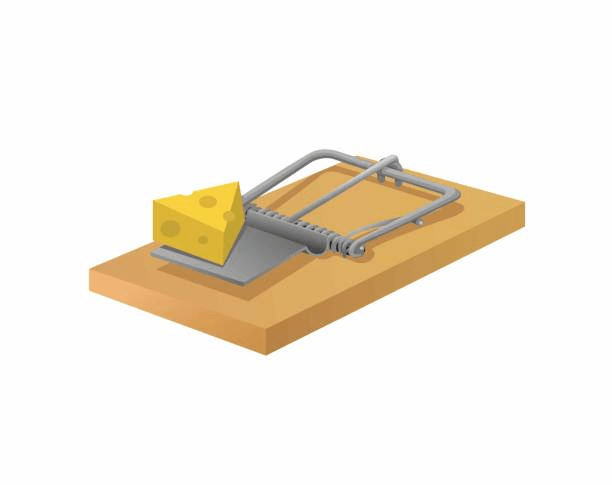
In The Sadhguru Podcast, Sadhguru warns against a trap of the mind12. Sadhguru jumps straight into a hypothetical story, what would happen if one set a trap for a rat13. Sadhguru rhetorically asks if you would put the words, “Do Not Enter” or “Danger” around the trap14. Sadhguru follows up with another rhetorical question, what would you put near the trap, he answers with cheese15. To the rat, the trap looks like a wonderful dinner, but when the trap gets the rat, they realize they are in danger16. Sadhguru explains this is the nature of a trap17. Sadhguru continues, stating the trap concept is the reason people warn others when they use their mind to find a solution, they end up falling into another trap18. Sadhguru sheds light on this line of thinking, similar to the rat, you will only know your solution finding is a problem once you’ve entered the trap19. Sadhguru asks his audience to look at the nature of the world, when a person solves one problem, ten problems arrive, solve ten, 100 problems arrive, etc20. Sadhguru recommends not trying to find solutions but create distance between yourself and the psychological activity21. Once you create this distance, Sadhguru believes you can’t be affected and won’t be trapped by the situation anymore22.
The rat is given an illusion that they can get their desired outcome without a harmful consequence. This leads to the rat being stuck, maybe even dead without any relatively easy way to escape. I believe Sadhguru uses this analogy to highlight the human experience in solution-focused thinking. One thought leads to ten, ten thoughts leads to 100, shows how overthinking and anxiety can result from the solution seeking process of thinking. I believe the anxiety can grow into a fear of all the possibilities, a fear of not covering all the bases, and so much more. I believe the fear that arises can be so debilitating, one can fall into their old ways, stunting growth, maybe even the death of the identity you are trying to create.
Sadhguru begins with an analogy that illuminates the psychological cycles humans can experience in their thinking. Similar to Sahara Rose’s advice, Sadhguru offers individuals to remove themselves from their situation, from their thinking, to escape from fanatical cycles of their experience. Sadhguru and Sahara promote not letting their goals inhibit them from having multiple perspectives on a situation and revealing different levels of self-inquiry. I believe the more you inquire and assess yourself, whether assessing your personality or your strengths, can help you become more mindful in your thinking patterns and your decision making. I believe implementing mindfulness and self-inquiry into your moment to moment experience will feel uncomfortable at first, it may even feel backwards, however, this discussion with yourself before the event as opposed to after may lead to growth before a decision rather than after.
Encourage Backwards
Reframe your vision. Personalize your growth. Grow Backwards. Examine your energy. Discuss your transformation with yourself and others you trust. Encourage your race at your own pace. Finish your origin story. Align with eternity. Read your echo. Embody your mystery. Heighten your soul. Discover the potential of your twin. Dance with yourself. Become aware of the living. Build your energy with your confidence. Be resilient in your quest.

Bibliography
- Highest Self Podcast, “594: Tantra Expert Nadine Lee: Go From Princess to Queen Energy With This,” podcast audio, March 18, 2025, accessed March 19, 2025, https://open.spotify.com/episode/0rNJDrokHlTHFzFW4BXavn. ↩︎
- Highest Self Podcast, ↩︎
- Highest Self Podcast, ↩︎
- Highest Self Podcast, ↩︎
- Highest Self Podcast, ↩︎
- Highest Self Podcast, ↩︎
- Highest Self Podcast, ↩︎
- Highest Self Podcast, ↩︎
- Highest Self Podcast, ↩︎
- Highest Self Podcast, ↩︎
- Highest Self Podcast, ↩︎
- The Sadhguru Podcast, “Don’t Fall for the Mind’s Trap!,” podcast audio, March 18, 2025, accessed March 20, 2025, https://open.spotify.com/episode/1WjPbQfJNIugn6SeRCE7Ez. ↩︎
- The Sadhguru Podcast, ↩︎
- The Sadhguru Podcast, ↩︎
- The Sadhguru Podcast, ↩︎
- The Sadhguru Podcast, ↩︎
- The Sadhguru Podcast, ↩︎
- The Sadhguru Podcast, ↩︎
- The Sadhguru Podcast, ↩︎
- The Sadhguru Podcast, ↩︎
- The Sadhguru Podcast, ↩︎
- The Sadhguru Podcast, ↩︎
 Spectrum of Spirit: A Digital Sanctuary for Spiritual Discourse and Community
Leave a comment