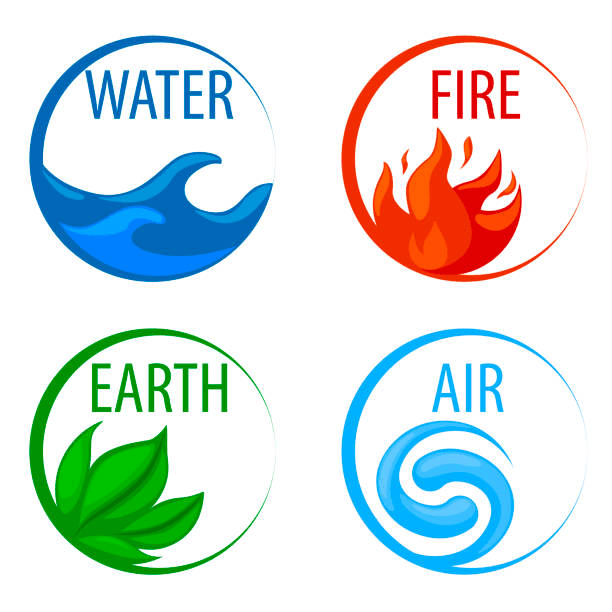
“Water. Earth. Fire. Air. Long ago, the four nations lived together in harmony”1. “Avatar: The Last Airbender” was the first exposure to the elements I remember having. Aang was one of my first inspirations as I used to practice water bending in the pool, earth bending at the beach, and air bending in every moment I spent away from the pool and the beach. I haven’t watched “Avatar: The Last Airbender” in years, but I could imagine if I did, I would lose my mind over the symbolism and representation of certain themes the show was trying to present. I believe the forces of water, earth, fire, and air all mirror the experiences we have as humans. I think in the ancient world, these elements have shaped the way people understand their experience. I believe in our contemporary world, these forces have a subtle impact on the way humans make decisions, climate change, natural disasters, etc. I imagine in humanity’s future, people will change the way they interact with one another due to the impact of these elements.
I couldn’t find any references to elements in the Hebrew Bible, however, I found some references in the letters written in the New Testament. Peter shares that on the day of the lord, heaven will disappear with a roar, and the elements will be destroyed. Another instance of elements in the New Testament comes from Paul, where he states when they were underage, they were slaves to the elemental spiritual forces of the world. Paul and Peter seem to have a somewhat negative perspective on the elemental forces surrounding them, mentioning being enslaved to the elements, and the elements being destroyed on the day of the lord. This blog will explore the forces Peter and Paul couldn’t wait to be removed from their lives, in one way or another, and how said forces relate to personal growth, relationships, and our modern society.
The Power of Elements

Gnomes come from European Renaissance Folklore2. Paracelsus, a Swiss thinker during the German Renaissance, first used the word to describe pygmies, a tribe of diminutive humans in Greek mythology, and classified the gnomes as earth elementals3. As time passed, 19th-century fairy tales used the term gnome in a way that equated to little people, using its association to the earth or the underground world4. The gnomes were strong, Paracelsus believed the “gnomi” could move through solid earth, similar to how humans move through air, but they still ate, drank, and talked like humans5. I believe Paracelsus also saw gnomes as “earth-dwellers” not just living on Earth, but grounded in the mountains and landscapes of their world. The tradition of gnomes has existed for centuries, with modern day classification coming within the last 400 years of humanity. Similar to other spirits, gnomes were understood to have a more evil type and a more benevolent type during early discourse, illuminating the values of their civilization6. The gnomes were thought to have their own underground community, with unique personal and cultural identities.
In classical Roman religion, genii loci were thought to be protective spirits of an area7. Altars and sacrifices were made to the protective spirits to honor their role of protecting their crossroads and their land as a whole8. The Ancient Roman Empire is a storied rule that exponentially expanded from modern day Britain to Iraq and from Egypt to the Black Sea. Even though the Romans were constantly conquering, they believed their genii loci would provide stability and consistency to their land, as they forced revolution in their world.
In the Shinto tradition, kami were thought of as deities, some viewed as ancient ancestors of Japanese civilians9. The earliest concepts of the kami revolved around them being an earth-based spirit, helping the ancient hunter-gatherers survive in their daily lives10. Similar to gnomes, the kami were thought to be spirits of the earth, of the mountains, however, kami were sometimes worshipped as god unlike their gnome counterpart11. Sarutahiko Okami is one of the deities seen as the leader of the earth kami, and Shinto priests were considered specialists of connecting with kami like Sarutahiko for patience and endurance12. Whether it’s the kami, the genii loci, or the gnomes, ancient traditions recognized the power of the earth, and attempted to make sense of the terrestrial spirits and other elementals.
Emotional Elements
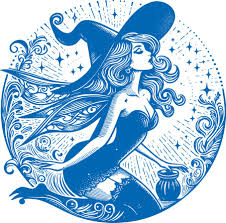
In Ancient Greek mythology, Naiads were a type of female spirit that watches over fresh bodies of water13. Naiad means to flow, or body of flowing water and some Naiads were thought to bring medical properties14. I believe Naiads gave the ancient Greeks the power to be resilient to change and transform, fighting their ailments to know their water spirits would protect them from long term harm. I believe Naiads were seen as an opportunity to carve a new, fluid path for the individual that receives their help.
Paracelsus reappears once more, having the first written mention of the elemental being associated with water, an Undine15. Undine, coming from the Latin word for wave, are similar to Naiads, depicted as female, however, Undines are found in forest pools and waterfalls16. Later writers evolved Paracelsus’ Undine into a water nymph and others took it as far as just an idea17. In pop culture, there are references to beings named Undine who control water18. Paracelsus mentions that a human male can have a Undine for a wife, but if the husband offends the Undine, she will return back to water19. Paracelsus emphasizes that just because a husband’s Undine wife can return back to water, doesn’t mean their marriage is nullified, but the two are meant to remain faithful to one another20. I believe Paracelsus enlightens us to a new perspective on surrender in relationships. Paracelsus shares how a Undine and human couple should adapt to their unique relationship, renewing the marriage their relationship on different terms. The husband must let go of control in their relationship to what once was their wife in human form, becoming fluid and powerful in the change, rather than resisting it.
In African-Caribbean traditions, Yemaya is the Mother of the Ogun River and referred to as the “Mother of the Waters”21. Yemaya gave birth to the world’s water, when she turned over in her sleep, springs would emerge, and when she walked, rivers would form22. After an unfortunate instance, Yemaya dies while she’s pregnant, her uterine wall causing a great flood that led to the oceans we have today23. Yemaya was said to wash away the troubles of her followers with water, and the waters from her womb sparked creativity and dreams24. Yemaya is a personified aquatic spirit, where every act she commits impacts the physical world. Yemaya is characterized as one who inspires intuition, creativity and dreams. The more I read about Yemaya’s mystery, the more her emotional intelligence shines through, the element’s ability to navigate troubling situations with elegance while also being considerate of the humans around her.
Rethinking Elements
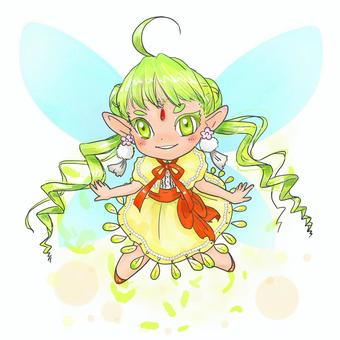
During the Renaissance, Paracelsus coined the term Sylph, an air spirit or an ethereal spirit25. Paracelsus delineated that though humans move through air, Sylphs move through their own element. Paracelsus emphasizes the Sylphs are the closest elementals to humans because they burn in fire, drown in water, and get stuck in earth26. In our modern culture, creators have adapted the concept of Sylphs to be able to adopt features of anything they would like and have even become fairies in some tales27. Paracelsus claims Sylphs are the most similar elementals to humans and I believe the spirits of the air have an influence on our thoughts and our intellect. Air gives people the freedom to communicate with each other, and I believe Sylphs have an unseen influence on our perception of the world.
In Ancient Greek mythology, Boreas is considered the god of the cold north wind28. Boreas has typically been involved in stories that involve the creation of a plant, such as the cypress tree29. William Smith proposes, in the story of Boreas taking the form of a stallion to mate with the horses, that this story is meant to express the swift speed of horses. I believe no matter how light some thoughts, words, and actions may seem, they have a strong influence on the way human relationships develop. Similar to how Boreas is believed to influence the speed of horses, I believe the air we breathe impacts our creativity, altering the structure of our society, and forms our spirituality.
In Islamic tradition, the Djinn or Jinn were seen as genies, invisible creatures who can choose to accept god’s guidance30. Through globalization, the Western world has described djinn with many words, such as demons, spirits, fairies, nymphs, and genies. Djinn were thought to be created by smokeless fire, a mix of fire and air, giving them extraordinary abilities like invisibility, transformation, and ascension31. The djinn are seen as intellectual enough to form their own tribes, where they usually don’t involve themselves with human activities32. Djinn’s knowledge is different from human knowledge, and I think there are some things we can learn from these elementals formed out of air and fire. I believe having an open mind to different perspectives allows free-flowing perspectives on our society, removing the idea of fixed knowledge/common sense, and opening gates to creative possibilities.
The Dual Nature of Elements
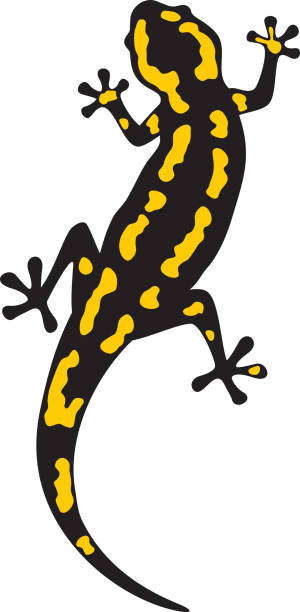
Speaking of fire, Salamanders, especially the fire salamander, are mythic legends of fire33. Since salamanders tend to live in rotting logs, when these logs were placed on fire, salamanders would tend to escape, leading the audience to believe the salamander was created from flames34. Aristotle and Pliny the Elder believe salamanders were so cold that it puts out fire on contact35. Additionally, some ancient Persians believed fiber was the fur of a salamander, a salamander being an animal that lived in fire and tolerated fire well36. This Salamander’s fur was thought to be fire resistant, as salamander’s ran happily in the hottest part of a fire37. In ancient times, salamanders were thought to be a transformation of fire into a new life form. The intensity of the fire brought observers to question their understanding, leaving them to decide whether the salamander was a gift or a burden. Artistic storytelling brewed from what people couldn’t understand, driving the powerful ambitions of philosophers and historians alike.
In many mythologies, the phoenix motif rises from the ashes. The phoenix is a legendary immortal bird, sometimes thought to die in flames and combustion, and is reborn into a new creation38. Having roots in Greek, Egyptian, and Persian mythology, authors throughout the years have described the legendary phoenix in a multitude of ways39. Claudian, a Latin poet from the 4th century, described the phoenix as having a mysterious fire flashing in its eyes and a flaming aura around its head40. The phoenix concept had been adopted by Gnostic Christians, where one author concludes baptism occurs three times, first through spirit, second through fire, and the third through water41. Also, phoenix symbolism shows itself in Middle Age European armor, an eagle’s head, chest, and wings rising from fire42. The phoenix represents embracing fire across multiple cultures and traditions. I believe the phoenix symbolizes what it means to change from discomfort, to struggle, to loss, even to death, and come out as something new. I believe the fire doesn’t just lead to something new, but to passionate growth and innovation.
As I wrote about two weeks ago, in the Hindu tradition, Agni is the god of fire. I believe Agni, phoenixes, and salamanders are all igneous spirits that represent the movement from destruction to renewal, either from plant to animal, death to life, or material offering to spiritual sacrifice. I believe fire reveals to us the paradox or dual nature present in humans personal journeys, when one path ends, another path is created.
A Call to Elements

Challenge the elements. Idealize your spirit. Shape your approaches intentionally. Show favor to the world. Emphasize your way. See what you need. Feel the power of the earth. Adapt to your emotions. Rethink your freedom. Drive your dual nature. Balance your elements.
Bibliography
- accessed March 12, 2025, https://www.reddit.com/r/conlangs/comments/3fx6ro/avatar_the_last_airbender_opening_sequence/. ↩︎
- “Gnome,” Wikipedia, the Free Encyclopedia, last modified March 6, 2025, https://en.wikipedia.org/wiki/Gnome. ↩︎
- “Gnome,” ↩︎
- “Gnome,” ↩︎
- “Gnome,” ↩︎
- “Gnome,” ↩︎
- “Genius Loci,” Wikipedia, the Free Encyclopedia, last modified March 2, 2025, https://en.wikipedia.org/wiki/Genius_loci. ↩︎
- “Genius Loci,” ↩︎
- “Kami,” Wikipedia, the Free Encyclopedia, last modified April 28, 2024, https://en.wikipedia.org/wiki/Kami. ↩︎
- “Kami,” ↩︎
- “Kami,” ↩︎
- “Sarutahiko Ōkami,” Wikipedia, the Free Encyclopedia, last modified January 25, 2025, https://en.wikipedia.org/wiki/Sarutahiko_%C5%8Ckami. ↩︎
- “Naiad,” Wikipedia, the Free Encyclopedia, last modified March 9, 2025, https://en.wikipedia.org/wiki/Naiad. ↩︎
- “Naiad,” ↩︎
- “Undine,” Wikipedia, the Free Encyclopedia, last modified January 19, 2025, https://en.wikipedia.org/wiki/Undine. ↩︎
- “Undine,” ↩︎
- “Undine,” ↩︎
- “Undine,” ↩︎
- “Undine,” ↩︎
- “Undine,” ↩︎
- “Yemeya,” African American Wiccan Society, accessed March 14, 2025, https://www.aawiccan.org/yemeya#:~:text. ↩︎
- “Yemeya,” ↩︎
- “Yemeya,” ↩︎
- “Yemeya,” ↩︎
- “Sylph,” Wikipedia, the Free Encyclopedia, last modified February 2, 2025, https://en.wikipedia.org/wiki/Sylph. ↩︎
- “Sylph,” ↩︎
- “Sylph,” ↩︎
- “Boreas,” Wikipedia, the Free Encyclopedia, last modified March 9, 2025, https://en.wikipedia.org/wiki/Boreas. ↩︎
- “Boreas,” ↩︎
- “Jinn,” Wikipedia, the Free Encyclopedia, last modified January 14, 2025, https://en.wikipedia.org/wiki/Jinn. ↩︎
- “Jinn,” ↩︎
- “Jinn,” ↩︎
- “Salamander,” Wikipedia, the Free Encyclopedia, last modified December 20, 2024, https://en.wikipedia.org/wiki/Salamander. ↩︎
- “Salamander,” ↩︎
- “Salamander,” ↩︎
- “Salamander,” ↩︎
- “Salamander,” ↩︎
- “Phoenix (mythology),” Wikipedia, the Free Encyclopedia, last modified February 26, 2024, https://en.wikipedia.org/wiki/Phoenix_(mythology). ↩︎
- “Phoenix (mythology),” ↩︎
- “Phoenix (mythology),” ↩︎
- “Phoenix (mythology),” ↩︎
- “Phoenix (mythology),” ↩︎
 Spectrum of Spirit: A Digital Sanctuary for Spiritual Discourse and Community
Leave a comment