The first time I see the mention of “one” in my NIV translation of the Bible is when god gathered the water under the sky into one place and called it the sea. I believe this form of poetic literature has so many significant meanings and brings up even more questions. It makes me wonder how this scripture was meant to guide the Hebrew people, to connect them, or to define them. I believe light has been seen as a guiding force for plenty of societies, examples from Biblical literature include, the burning bush and the pillar of fire. Additionally, I believe sound has connected people from all walks of life, examples from Biblical literature include the Israelites Exodus and the Israelites conquering of Jericho. Lastly, I believe spirituality has defined humans in what they are and what they are becoming, examples from Biblical literature include David asking for a renewed spirit and Ezekiel having his path made by a spirit. Similar to how the Genesis account replays how god connected the water to create the seas, I wonder if light, sound, and spirit aren’t separate forces, but are connected in ways that we don’t understand yet. I wonder if these three forces are the full expression of our perception of our experiences.
Light has been used as a tool to make scientific discoveries, while also being the subject matter to which scientists study to make scientific discoveries. Sound has been used as a tool to create new art forms, while also being an uncontrolled factor to bring audiences a new experience with their art. Spirit has been used as a tool to explain spirituality, while also being a forgotten piece in the dimension of spirituality. I believe the duality of these three forces shapes the way humans interpret science and art and use these subject matters to influence the different sections of their existence. I will further lay out how I believe these three subject matters shape the interconnectedness of life.
One Light

“See the light”. A common phrase that has one physical meaning and a range of metaphorical meanings. I believe, since ancient times, light has been deemed as a good or beneficial force, due to the way light helps humans in their desire to survive. However, like every force, there can be not enough light, under stimulating a human’s awareness, and too much light, over stimulating a human’s awareness. The spectrum of light was first coined by Isaac Newton, when he discovered white light could be separated into a range of colors using a prism. When Newton first used “spectrum” he was borrowing from the Latin word for “appearance” or apparition”. Later on, James Clerk Maxwell took Newton’s spectrum of light beyond visible light and applied it to electromagnetic light. Maxwell illustrated how there are different intensities of wavelengths, from radio to gamma waves. On either side of the light spectrum, human awareness is impacted, affecting a human’s ability to survive, the appearances of their threats, and the intensity of a situation. I believe with a proper exposure and understanding of light, the possibly hidden parts of your experience can be observed.
Transitioning to a spiritual interpretation of light, light has represented wisdom, the divine, and enlightenment. In Ancient Egyptian mythology, the “ka” and “ba” were one of the earliest concepts to describe human souls or one’s spirit. The “ka” was thought of as the vital essence or life force of a living being. The “ba” was thought of as a radiant force, the personality that exists in this current life and into the next life. Additionally, in Ancient Indian religious traditions, they had a concept called “atman” which refers to the inner self, the inner light of the soul, or one’s spirit. The atman is thought of as eternal, transcending physical existence. The atman was central to further developments of spiritual enlightenment and reincarnation. Mastering one’s atman was thought to lead to enlightenment, and the Kabbalah and Sufism traditions view enlightenment as seeing the unseen. Through understandings of the ba and the atman, we could see the development of one’s spirit is similar to the development of accessing one light, revealing parts of human experience that were once not seen or understood.
One Sound
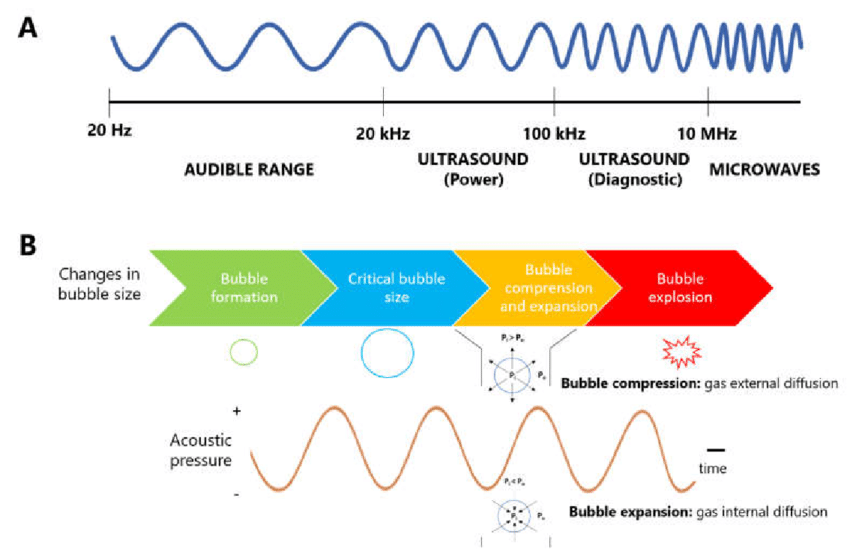
“Hear the music”. A common phrase that has one physical meaning and a range of metaphorical meanings. Sound is different from light in the way that humans can create physical sound from their own being, while light is a force humans have learned to manipulate to accomplish their goals. Hermann von Helmholtz worked in the music field and was the first to introduce the spectrum of sound, the range of harmonious components of tones in music. Helmholtz believed these harmonic components were not just mechanisms, but were waves similar to the waves of light in the light spectrum or radio waves in the electromagnetic spectrum. I believe, and I think Helmholtz would agree, every voice and every sound resonates within a vast sound spectrum. Light and Sound are also similar in their therapeutic properties. Like light, sound can be manipulated and measured by humans. People use sound and light to shape the world around them, helping their survival and benefiting their experience. Sound is used in a therapeutic or medical way through sound healing, the combination of sounds to improve holistic wellbeing, ultrasound screenings, and vibrational sound healing, the use of sound to open up cells and improve healing within the body. I believe these therapeutic and medical uses of sound illustrate the existence and use of the sound spectrum.
On the spiritual side, sound is thought of as the force that leads to creation. In Ancient Indian traditions, the “Om” was thought as the beginning sound of the universe. In the Hebrew Bible, god spoke and the world began to form into existence. In the Hebrew tradition, god’s spirit was thought to transfer through sound, through breath, and through life. The term “ruach” was the term used to refer to the spirit or breath of god, of life, and of humans. The ruach is associated with the breath of god or a divine spirit that brings beings to life and inspires beings to action. Additionally, in Ancient Chinese traditions “qi” was thought of as the vital life force or energy that exists in all living things. Qi was adapted by both Confucianism and Daoism, emphasizing the cultivation of this energy to guide their spiritual lives. Ruach and Qi both describe subtle sounds, one sound that represents the transfer of energy leaving and coming back to a living being. This energy flows through their body, vibrating throughout their inner organs to keep the vessel of the body going.
One Spirit

“Keep your spirit alive”. Unlike light and sound, I don’t know what the physical meaning of this statement is, but I could imagine the endless metaphorical applications this phrase could have. I have been outlining the origins of the terms spectrum and spirit throughout the article to outline how each culture defines spirit and why I believe when taking these thoughts into account, displays spirituality as a spectrum I can’t define yet. One of the earliest concepts of spirit that I found is in Ancient Mesopotamia, where spirit was connected to the afterlife. The Sumerian term “zi” and the Akkadian term “etemmu” was a term used to describe the spirit or ghost of a person that has died. I believe the Ancient Mesopotamian people viewed the spirit as the echo of a human who was once living. As I’ve outlined earlier, the Ancient Chinese believed in the concept of “qi” and the last ancient group I would like to discuss are the Ancient Greeks. According to my research into the Ancient Greek tradition, the “Iliad” and the “Odyssey” Homer used the term “psyche” to describe the soul or spirit. The psyche was usually referenced in the context of life and death. Relating to the Hebrew Bible, The Ancient Greeks saw the spirit as the psyche’s breath. Psychology has a connection to the Ancient Greek concept of psyche, however the modern study of psychology focuses more on the mind and behavior. Contemporary psychology focuses on the unconscious mind and how it acts as a quiet force shaping our reality. I believe the development of our modern psychological studies could be an echo of the ancient spiritual ideas of zi, etemmu, qi and psyche based on observable findings.
One Spectrum
Before I close, I have to attribute my curiosity into the origins of spectrum and spirituality from a visit I took to Montreal. I came across an art exhibit in my travels where Erik Olson’s Hemikrania was being showcased. After being able to meet up with Erik and discuss his work, I realized how deep he went into understanding his unique migraine symptoms and expressing this in a way that was understandable to me, someone who very rarely experiences migraines. I have to accredit my findings to Erik Olson and I am very grateful for his work.
Encourage your light. Read the sounds in your life. Observe your spirit. Make your way one of one. Shape your spectrum. Connect your world to your spirituality. Inhale through meditation. Express your music. Delve into the origins of your art. Discover the mysteries of science. Seek to dance. Explore your inner light. Identify the different aspects of your thoughts. Notice similarities. Recover the force within you.
 Spectrum of Spirit: A Digital Sanctuary for Spiritual Discourse and Community
Leave a comment